
How South Carolina Inmate Records Work
South Carolina inmate records are not stored in one statewide jail database. Local custody records are maintained by county sheriffs, regional detention centers, or local detention authorities. State prison custody records are maintained by the South Carolina Department of Corrections. Federal prisoners are located through the Bureau of Prisons. Immigration detainees are located through ICE. South Carolina VINE provides custody notification where supported.
This split matters most after an arrest. A person can be booked into a county jail, appear in court, post bond, be transferred to another county on a warrant, receive a state sentence, and later appear in the SCDC locator. Each move changes which system is best for the search.
Find South Carolina Inmate Records
Use the most specific identifier first. For county jail records, the last name and booking county are often enough. For SCDC records, the SCDC number or SID is stronger than a name search. For federal records, BOP number searches are best when the number is known. For ICE, the A-number and country of birth are the strongest search fields.
- Start with the county jail if the arrest is recent or the person is awaiting bond or trial.
- Use the County Directory to reach the correct county subdomain and roster route.
- Search SCDC for a sentenced state prisoner.
- Search BOP for federal custody and ICE ODLS for immigration detention.
- Use South Carolina VINELink for custody-status notification when available.
County, SCDC, BOP, and ICE
The same person may touch more than one custody system, but each system answers a different question. County jail records answer where a recently booked person is being held, what charges were booked, and whether bond or release information is listed. SCDC records answer where a sentenced state prisoner is housed. BOP and ICE records answer federal and immigration custody questions.
| Custody | Run By | Best Search | What It Does Not Show |
|---|---|---|---|
| County jail | County sheriff or regional jail | County roster or detention contact | State prison sentence details |
| SCDC prison | South Carolina Department of Corrections | SCDC incarcerated inmate search | Most recent county bookings |
| Federal prison | Federal Bureau of Prisons | BOP inmate locator | State court docket details |
| ICE detention | U.S. Immigration and Customs Enforcement | ICE ODLS | County jail roster history |
SCDC Inmate Records
The SCDC locator is the official South Carolina search for people currently sentenced to and incarcerated at SCDC. It supports SCDC number, SID, and name searches. SCDC says users can click a name to open an Inmate Search Detail Report, then read the SCDC ID, location, and dorm-room-bunk fields in the sentence and location column.
The SCDC incarcerated inmate search is the state-prison record path for South Carolina inmate records.
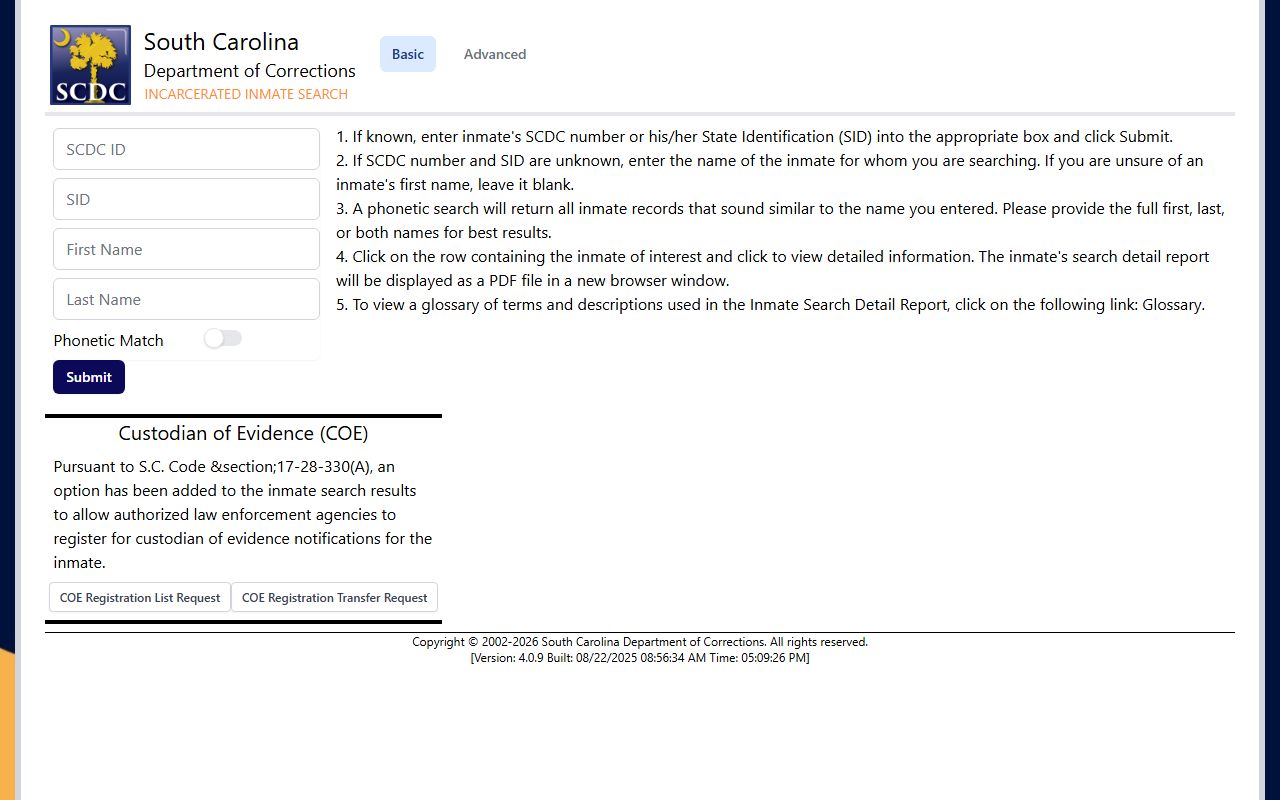
Use the SCDC record after state sentencing or transfer, not as a substitute for a county jail roster immediately after arrest.
What a Jail Roster Shows
County roster fields vary because South Carolina counties use different jail-management systems and public portals. The research found Zuercher, Tyler/New World, county jail pages, county detention sites, and phone or FOIA fallback paths. A strong roster may show booking photo, name, booking number, charges, bond, booking date, release status, and facility location. A thin county may require a phone call or records request.
| Field | Typical Use |
|---|---|
| Name | Confirms the matching person, with spelling checked against legal name. |
| Booking number | Identifies a county jail booking, not an SCDC prison number. |
| Charges | Shows booked charges that may later change in court. |
| Bond | Shows release conditions when the county publishes them. |
| Facility or housing | Points to the jail, annex, regional center, or housing area. |
| Status | May show in custody, released, transferred, or held for another agency. |
VINELink Custody Notice
South Carolina VINE/VINELink is a custody-status and notification channel. The research identifies it as a free, secure, confidential way to access custody status and criminal case information, with the phone line 1-866-727-2846. VINE is useful when the goal is notification, but it should not be treated as a full replacement for SCDC, BOP, ICE, county rosters, or court records.
The South Carolina VINELink state page is the statewide custody-notification source.
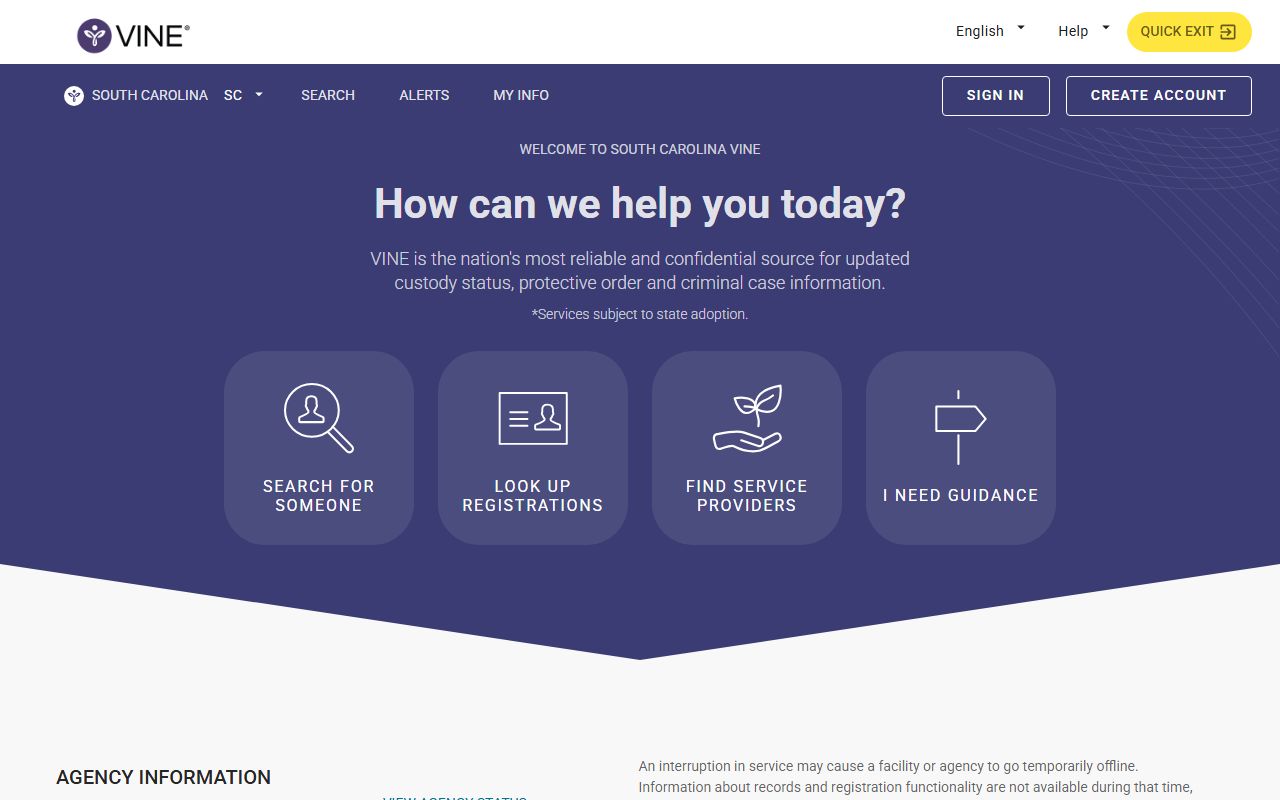
Use VINELink with the roster or locator that identifies the custodian, especially when release or transfer notification matters.
Public Records Requests
South Carolina FOIA supports access to public jail and prison records, subject to exemptions. Section 30-4-30 includes the right to inspect, copy, or receive public records unless another law or exemption applies. Section 30-4-30(D) specifically covers documents identifying persons confined in a jail, detention center, or prison for the preceding three months, with exemptions still possible.
The South Carolina FOIA statute sets the statewide public-records framework for inmate records.
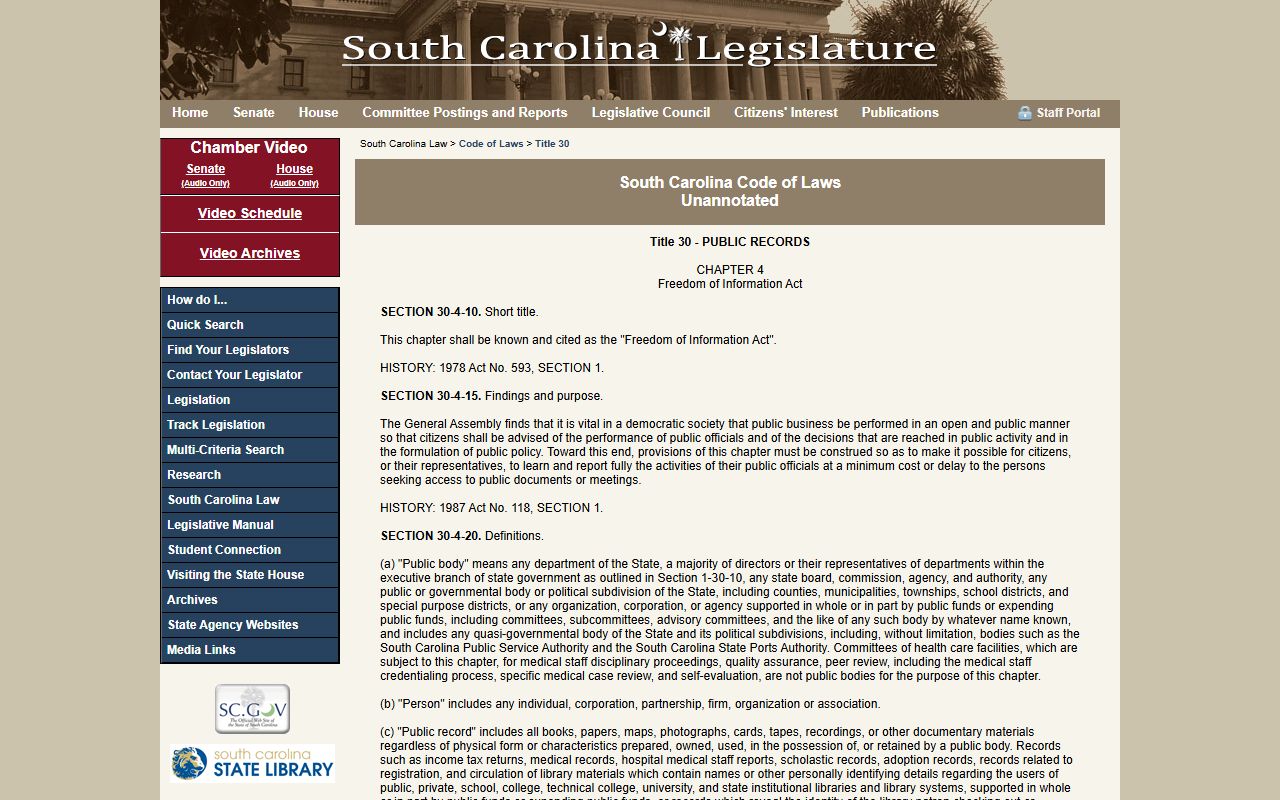
Requests for SCDC records go to SCDC, while county jail records go to the county sheriff, detention center, or local FOIA contact.
Court Records Are Separate
Jail records are custody records. Court records are case records. After an arrest, the South Carolina Judicial Branch Public Index is used to follow charges, hearings, dispositions, and sentencing. The Judicial Branch research notes that public case-record searches require cookies and JavaScript, some browsers need a pop-up exception for details, and home address information is no longer displayed on the public index for new and existing cases as of January 1, 2026.
The South Carolina Public Index portal is the statewide court-record entry point.
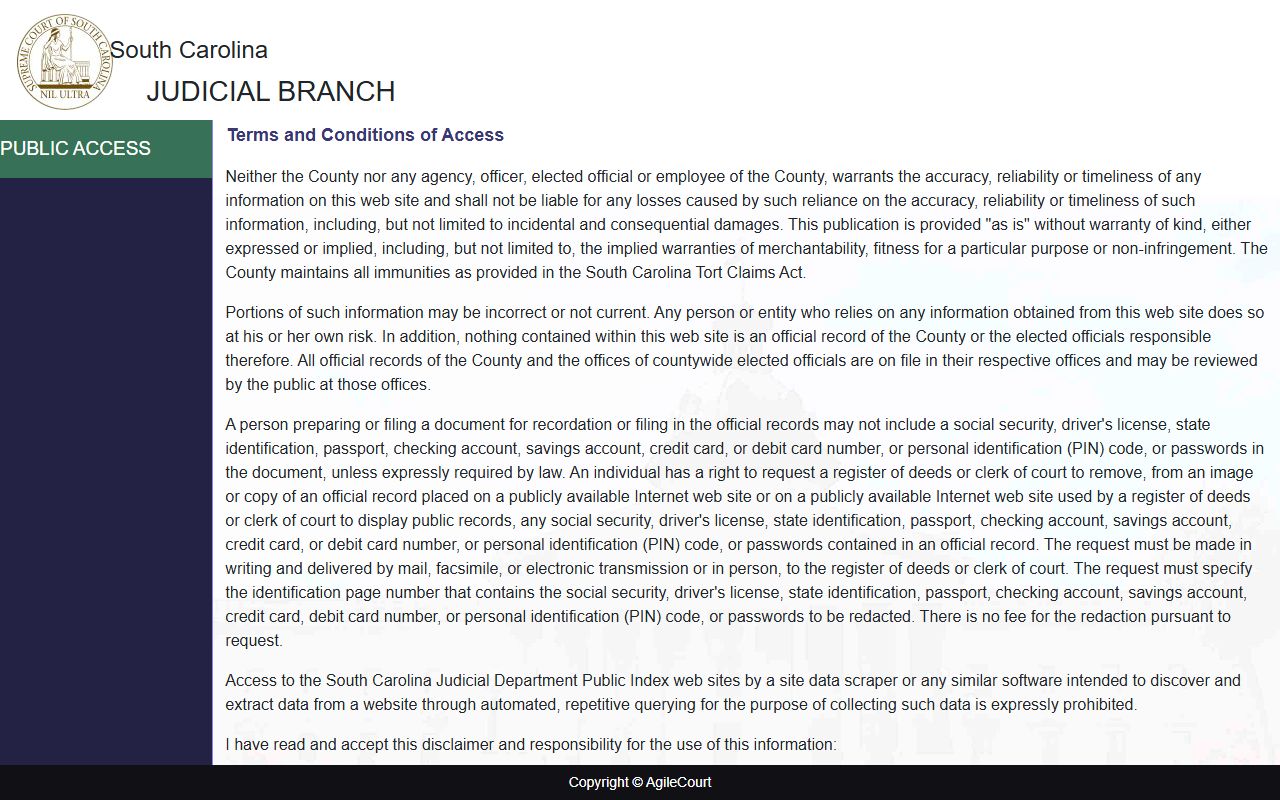
Use court records to understand the case, not to confirm live custody without checking the jail or locator.
Federal Inmate Records
BOP says its locator finds federal inmates incarcerated from 1982 to the present. South Carolina federal facilities include Bennettsville, Edgefield, Estill, and Williamsburg/Salters. A person in BOP custody may have South Carolina ties, but the county jail roster will not act as the federal prison locator.
The BOP inmate locator is the official federal search source.
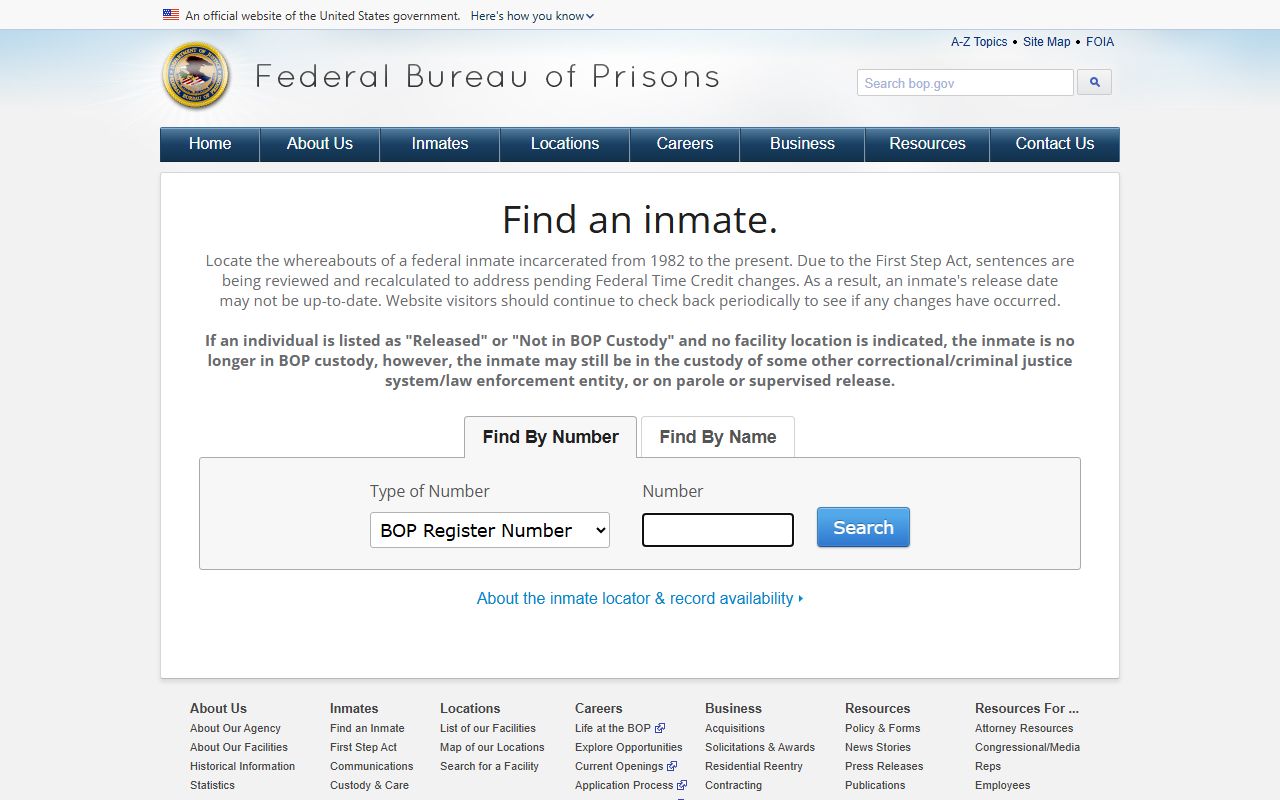
Use BOP for federal custody and the South Carolina Public Index for any state case that remains visible after a federal transfer.
When Records Move Systems
A South Carolina inmate record can move from one system to another as the case changes. A new arrest begins with a county or regional jail. A bond or release order can remove the person from the active roster while the court case remains in the Public Index. A state prison sentence can move the custody search to SCDC after classification. A federal sentence can move the search to BOP. An immigration detainer or detention case can move the search to ICE ODLS.
That movement is why a missing current roster result should not be read as proof that no record exists. Check the case county, the holding facility, the state-prison locator, and any federal or immigration locator that fits the facts. The facility directory is useful when the known detail is a place name, such as Alvin S. Glenn, J. Reuben Long, Hill-Finklea, Sheriff Al Cannon, W. Glenn Campbell, or an SCDC institution.
South Carolina Records Request Detail
FOIA requests should be sent to the agency that maintains the record. SCDC's FOIA process requires a written request to the FOIA Coordinator unless the request falls within the special in-person availability rule in Section 30-4-30(D). A written SCDC request must describe the requested information and include the requestor's name, address, and phone number. County jail records are requested from the county sheriff, detention center, public-records office, or local FOIA contact identified by the county subdomain.
SCDC lists hardcopy charges of $0.10 per black-and-white page and $0.25 per color page, plus $18.95 per hour for search, retrieval, and redaction, subject to the South Carolina FOIA limits. County fees and production methods may differ, but the same practical rule applies: ask the agency that created or holds the record, not a statewide portal that only routes users.
Public Record Search
Sponsored Results